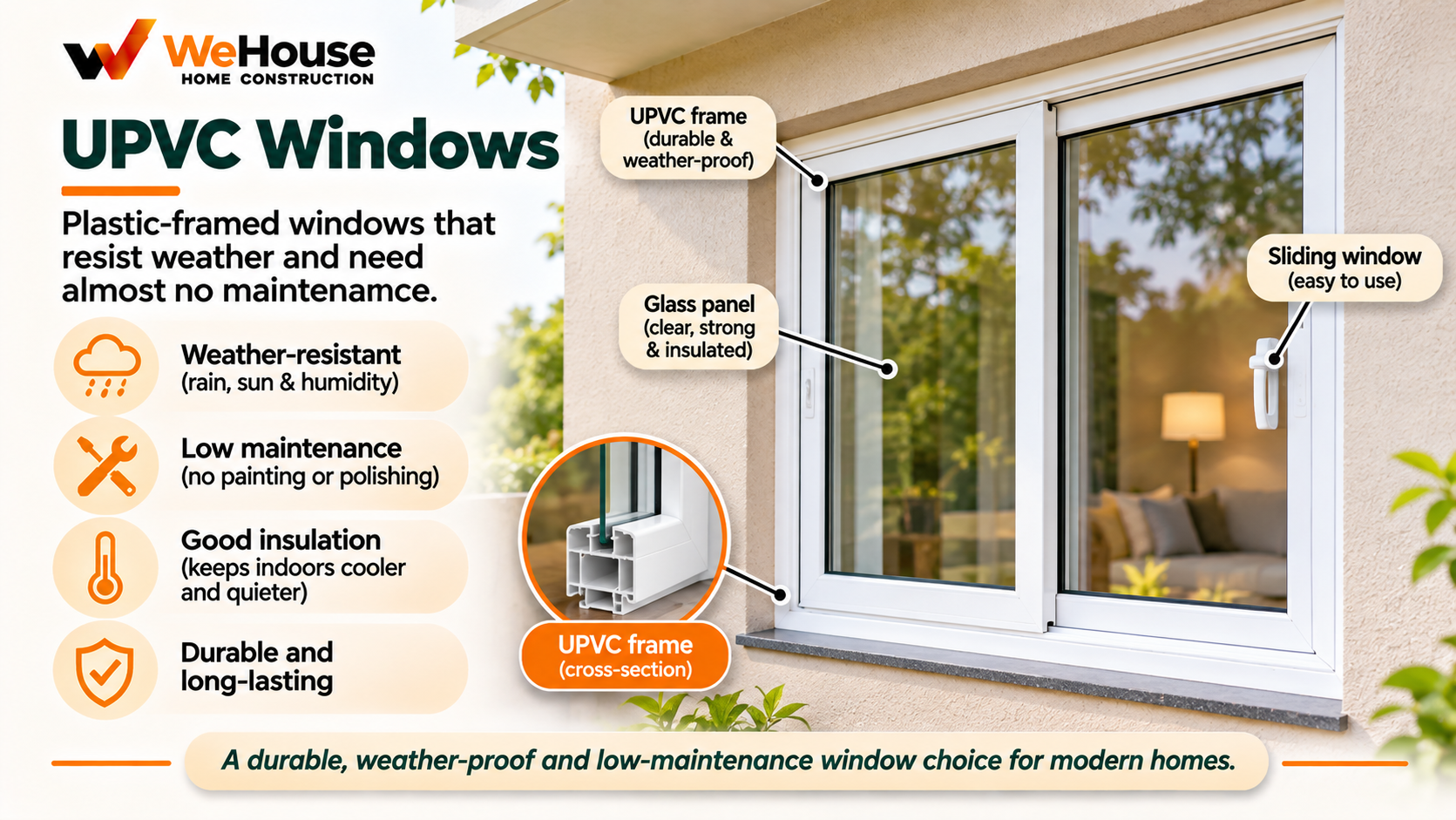
 What are UPVC windows?
UPVC windows are window frames manufactured from unplasticized polyvinyl chloride, a rigid synthetic plastic material distinct from the flexible PVC used in applications like pipes or flooring, since UPVC does not include the plasticizer additives that make standard PVC flexible, giving it the structural rigidity needed for a window frame while retaining PVC's inherent weather resistance and low maintenance characteristics. UPVC window profiles are manufactured as multi-chamber hollow sections — typically 3-5 internal chambers running the length of the profile — a design that provides structural stiffness while the trapped air within the chambers also contributes meaningful thermal and acoustic insulation.
What are the advantages of UPVC windows over timber and aluminium?
| Factor | UPVC | Timber | Aluminium |
|---|---|---|---|
| Maintenance | Low — no painting or refinishing needed | High — periodic painting/polishing required | Low to moderate, depending on finish |
| Weather and termite resistance | Excellent — does not rot, warp or attract termites | Vulnerable to warping, rot and termite damage without treatment | Excellent against weathering, not applicable to termites |
| Thermal insulation | Good, particularly with multi-chamber profiles | Good, natural insulator | Poor, unless thermally broken (a more specialised, costlier aluminium system) |
| Sound insulation | Good, particularly with double glazing | Good | Moderate, varies with profile and glazing |
| Typical cost | Mid-to-premium | Mid-to-premium, higher for quality hardwood | Budget-to-mid, generally the most economical option |
UPVC's particular combination of low maintenance, good insulation performance and resistance to warping and termite damage without needing periodic treatment, unlike timber, has made it an increasingly popular choice in Indian residential construction over the past decade, particularly for owners prioritising energy efficiency and long-term, low-upkeep performance over the lowest possible upfront cost that ordinary aluminium typically offers.
What is the difference between single and double glazing for UPVC windows?
Single glazing uses a single pane of glass within the UPVC frame, offering the basic weather sealing and security benefits of the UPVC system itself but limited additional thermal or acoustic benefit beyond the frame's own insulation. Double glazing uses two glass panes with a sealed air or inert gas gap between them, meaningfully improving both thermal insulation (reducing heat transfer through the window, relevant for both keeping heat out in summer and in during winter) and sound insulation (the air gap disrupting sound transmission considerably more effectively than a single pane), at a correspondingly higher cost than single glazing, generally considered worthwhile for rooms specifically prioritising noise reduction (facing a busy road, for instance) or in climates with significant temperature extremes where the thermal benefit has clear practical value.
What quality factors matter when choosing UPVC windows?
- Chamber count and profile quality. More chambers generally mean better structural rigidity and insulation performance, though at a higher cost; profile quality and UV stabilisation (preventing the UPVC from degrading or yellowing under prolonged sun exposure) also significantly affect long-term performance.
- Hardware quality. The multi-point locking mechanisms, hinges and handles used in a UPVC window system significantly affect its long-term smooth operation and security performance, and vary considerably in quality between different suppliers.
- Glazing specification. Single versus double glazing, and the specific glass type (clear, tinted, or with additional coatings), should be matched to the specific room's orientation, noise exposure, and the owner's thermal and acoustic priorities.
- Installation quality. Even a high-quality UPVC window system performs poorly if installed with inadequate sealing around the frame perimeter, allowing air and water infiltration around rather than through the window itself.