 What is termite treatment?
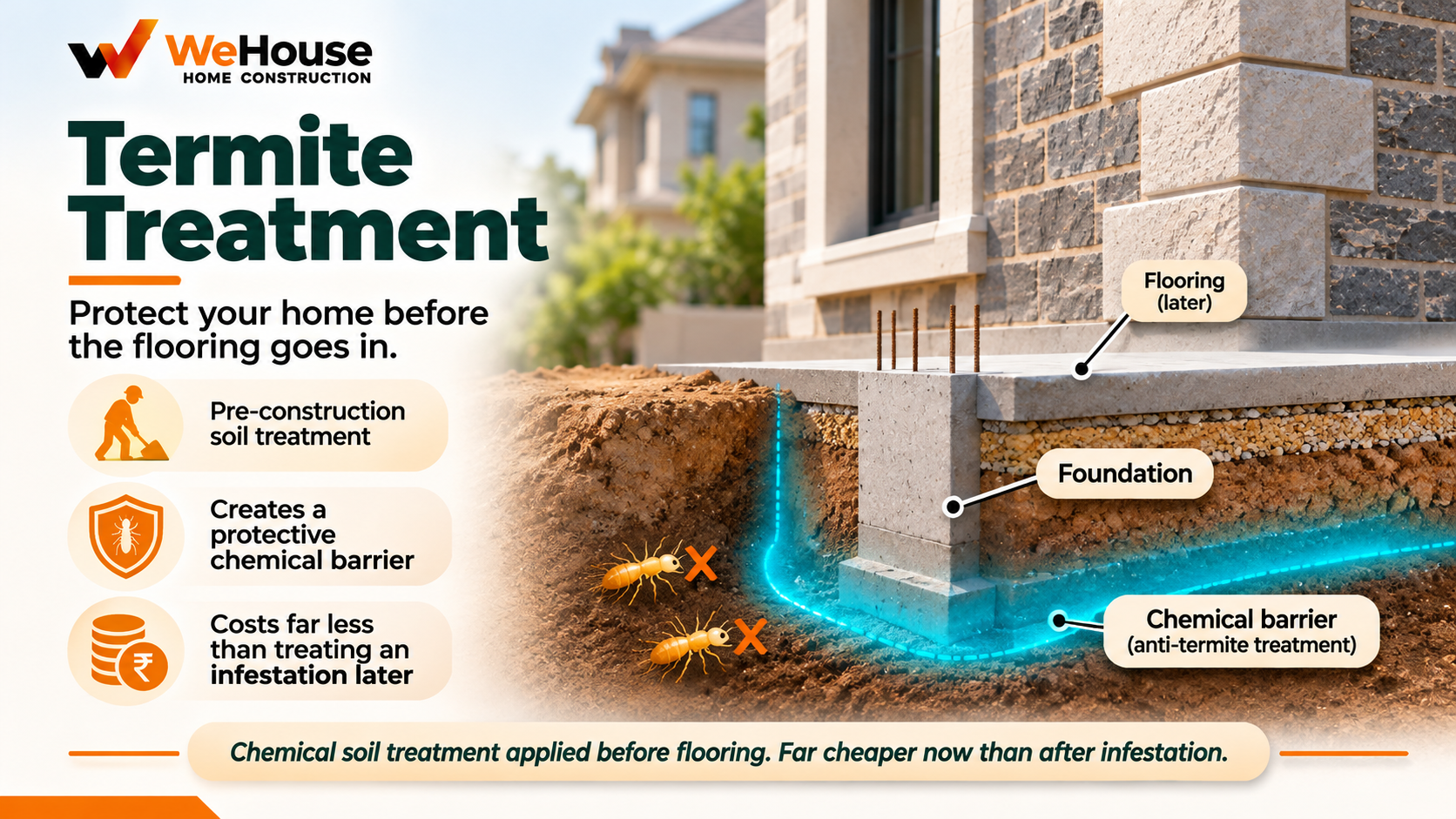
Termite treatment is the application of chemical soil treatment, called a termiticide, around and beneath a building's foundation and plinth, specifically to create a protective barrier that prevents termites travelling up from the soil into the building's structure, where they can cause significant, often hidden damage to timber door and window frames, wooden flooring, furniture, and even the paper insulation on electrical wiring, over months or years of undetected infestation.
Why is pre-construction termite treatment more effective than post-construction treatment?
Pre-construction treatment, applied to the foundation trench, backfill soil and plinth filling before the building's foundation and ground floor slab are cast, creates a continuous chemical barrier in the soil directly beneath and around the building — precisely where termites would otherwise travel upward from the surrounding ground into the structure. Once a building's foundation and floor slab are complete, this soil becomes largely inaccessible, meaning post-construction treatment, applied after the fact to address a discovered infestation, can generally only treat accessible soil around the building's perimeter and any visible termite activity, without being able to create the same comprehensive, continuous barrier directly beneath the slab that pre-construction treatment achieves. This is precisely why pre-construction treatment is considered the far more effective, and considerably more cost-effective, approach, and why it is worth insisting on as a standard part of foundation construction rather than treating termite protection as an optional add-on to be addressed only if a problem later arises.
What does the pre-construction termite treatment process involve?
| Stage | What is treated |
|---|---|
| Foundation trench bottom | Soil at the base of the excavated foundation trench, treated before footing concrete is poured |
| Foundation trench sides | Vertical soil faces of the excavated trench, treated as the foundation masonry or concrete is built up |
| Backfill soil | Soil used to backfill around the foundation structure, treated during the backfilling process |
| Plinth filling | The fill material within the plinth area, treated before the ground floor slab is cast on top of it |
| Perimeter treatment | Soil immediately around the building's external perimeter, treated as a final barrier once construction reaches ground level |
This staged approach, following the specific methodology and chemical dosage set out in IS 6313, the code of practice for anti-termite measures in buildings, creates a continuous, overlapping chemical barrier at every point where termites could otherwise find a path from the surrounding soil into the building's structure.
What are the signs of termite infestation?
- Mud tubes. Termites build narrow, visible mud tubes along foundation walls or other surfaces as a protected travel path from soil to timber; these are often the first visible sign of activity.
- Hollow-sounding timber. Wood that has been hollowed out from within by termite feeding often sounds hollow when tapped, even though its outer surface may look largely intact.
- Discarded wings. Swarming termites shed their wings after finding a new location, and small piles of discarded wings near windows or light fixtures can indicate a nearby colony.
- Visible damage to door/window frames or furniture, sometimes only discovered when a frame or piece of furniture that looks fine on the surface crumbles or breaks unexpectedly under light pressure.
Does termite treatment protect electrical wiring?
Yes, indirectly but meaningfully — termites are known to damage the cellulose-based paper or cotton insulation historically used in some electrical wiring, and even with modern PVC-insulated wiring, termites can still cause damage by tunnelling through conduit or around cable runs in search of cellulose material elsewhere nearby, making termite protection relevant not just for visible timber elements but for the broader integrity of a building's concealed electrical and other systems over its lifetime, reinforcing why comprehensive pre-construction treatment is worth the modest investment it requires.