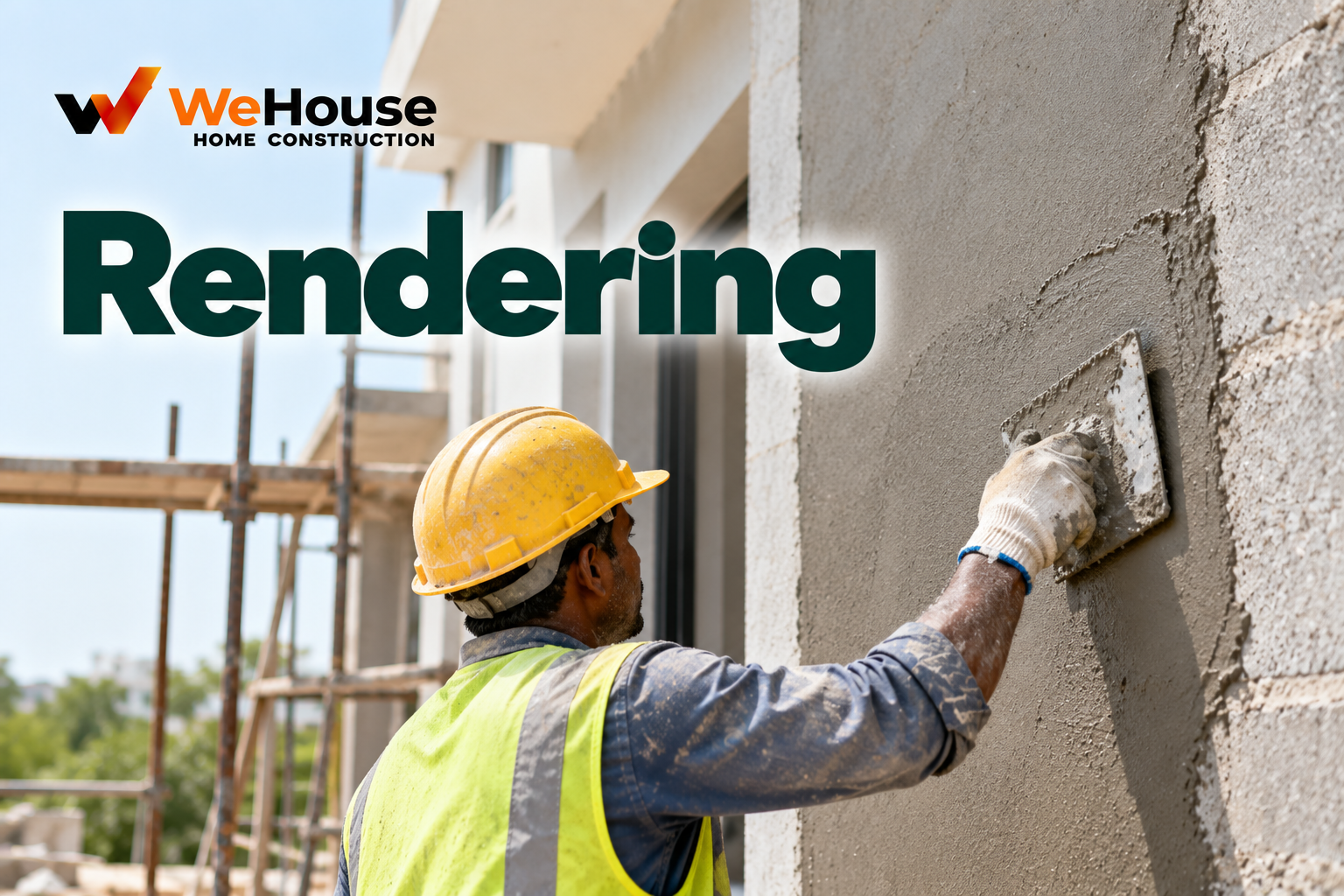
 What is rendering?
Rendering is the application of a cement-based mortar coat to an external wall surface, closely related to ordinary plastering in its underlying material and protective purpose, but specifically associated with a deliberate decorative surface texture rather than the smooth, flat finish typical of internal plaster. The term is used somewhat interchangeably with ""external plastering"" in everyday Indian construction conversation, but more precisely refers to the textured or patterned treatment applied to that external coat as a specific architectural design choice.
What types of rendering textures are commonly used?
| Texture type | Description |
|---|---|
| Sand-faced finish | A fine, slightly granular surface texture achieved by working the final coat with a sponge or specific trowel technique while still wet |
| Pebble-dash | Small stone chips or pebbles thrown or pressed into the wet render coat, creating a rough, textured, stone-like finish |
| Grooved / scored finish | Deliberate horizontal or vertical grooves tooled into the render, often used to create a visual pattern resembling stone blocks or simply as a contemporary design feature |
| Textured roller finish | A patterned roller or trowel tool worked across the wet render to create a repeating texture, a relatively quick and affordable decorative option |
Each texture is achieved through a specific hand or tool technique applied to the render coat while it remains workable, requiring skilled, experienced labour to execute consistently across a large wall surface, which is part of why more elaborate rendering techniques command a higher cost than plain plastering.
Why choose textured rendering over plain plastering?
Textured rendering offers two potential advantages over a plain, smooth plaster finish: an architectural design choice, giving a building's exterior a particular visual character (traditional, rustic, contemporary or otherwise, depending on the specific texture chosen) that a flat painted surface cannot achieve, and, in some cases, a degree of additional surface durability or practical benefit — a textured surface can sometimes better conceal minor surface imperfections or hairline cracking than a perfectly flat, smooth finish would, though this is a secondary consideration relative to the primary aesthetic motivation behind choosing rendering.
Does rendering need the same preparation and curing as plastering?
Yes. Rendering follows the same underlying material and application principles as ordinary plastering — RCC surfaces need hacking before rendering for adequate bond, the base surface needs to be clean and properly wetted before application, and the finished render needs the same minimum 7-day curing period as any cement-based work to develop full strength and crack resistance. The only meaningful difference from ordinary plastering is the final decorative texturing step applied to the surface while the render coat is still workable, not the underlying material composition, preparation, or curing requirement.
What goes wrong with rendering on site?
- Inconsistent texture across a large wall surface, particularly for hand-applied textures like pebble-dash or sand-faced finishes, where skill and technique consistency across different sections or different days of work can produce a visibly uneven result.
- Inadequate curing, leading to shrinkage cracking that is sometimes harder to spot early on a textured surface than on a plain, smooth finish, but no less consequential for the render's long-term durability.
- Poor adhesion on RCC surfaces lacking adequate hacking, the same underlying risk discussed in more detail under hacking and plastering, which applies equally to textured render as to plain plaster.
- Texture choice that traps water or dirt, where a deeply textured or porous finish, while visually appealing, can accumulate dirt staining or retain moisture more readily than a smooth, easily cleaned surface, a practical maintenance trade-off worth considering alongside the aesthetic appeal.