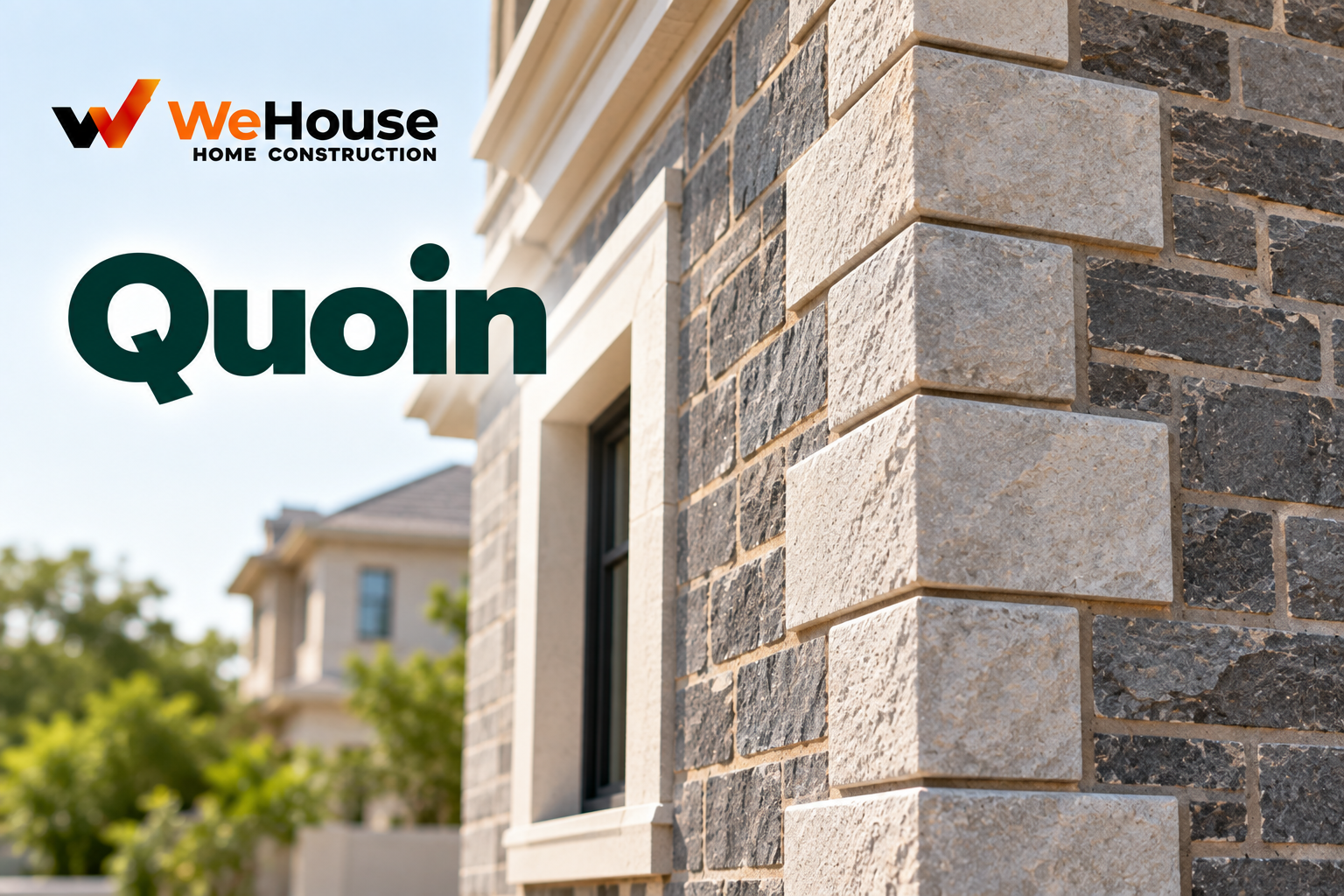
 What is a quoin?
A quoin is a masonry unit, traditionally cut stone or specially selected brick, positioned at the external corner of a building, historically distinguished from the ordinary wall masonry surrounding it by being larger, more carefully dressed and finished, and often laid in a distinctive alternating long-and-short bonding pattern running up the full height of the corner. The term originates from traditional masonry construction practice, where building corners represented a particular structural vulnerability — the point where two walls meet is subject to different stress patterns than a straight wall run, and historically needed reinforcement through careful, deliberate corner masonry detailing.
Why were quoins structurally important in traditional masonry construction?
In traditional, pre-RCC load-bearing wall construction, a building's corner is where two perpendicular walls meet and must be effectively bonded together to transfer load reliably and resist the tendency of a corner to crack or separate under differential movement or lateral load. Using larger, more carefully selected and dressed stones or bricks at the corner, interlocked in an alternating long-and-short pattern that ties into both intersecting walls at each course, provided meaningfully better structural continuity and strength at this critical junction than simply continuing ordinary wall masonry around the corner without special treatment — a genuine structural function, not merely a decorative one, in the masonry construction traditions where quoins originated.
Why are quoins less structurally relevant in contemporary Indian construction?
Most contemporary Indian residential and commercial buildings use RCC framed construction, where a building's corners are typically defined and reinforced by a structural RCC column, not by the masonry walls themselves, which in framed construction are simply non-structural infill rather than load-bearing elements. This means the specific structural problem quoins historically solved — reinforcing a vulnerable load-bearing masonry corner — generally does not arise in the same way in contemporary framed construction, since the actual structural corner reinforcement is provided by the column rather than by any special masonry detailing at that location.
Where does quoin detailing still appear today?
| Context | How it's used |
|---|---|
| Heritage and restoration projects | Genuine structural or historically accurate quoin masonry, preserving or replicating original construction technique |
| Traditional or colonial-style architectural design | Decorative quoin detailing applied to a contemporary building's elevation as a deliberate stylistic choice, referencing historical architectural vocabulary |
| Applied stone or precast corner cladding | A purely decorative, non-structural finish material applied over the actual RCC structural corner, designed to visually evoke the traditional quoin pattern |
In this contemporary decorative context, quoin detailing is executed as a finishing or cladding element — applied natural stone, precast concrete units, or even a moulded and textured render finish designed to replicate the visual rhythm of traditional quoin masonry — rather than as genuine structural masonry, making the choice to include it purely an architectural and aesthetic decision for a building's elevation design, entirely independent of the building's actual underlying RCC structural system.
Is quoin detailing worth including in a contemporary design?
This is purely a question of architectural style and personal preference rather than any structural or functional necessity in contemporary RCC construction — quoin detailing can lend a building's elevation a traditional, substantial or classically inspired visual character that some owners and architects specifically want, but it adds a purely decorative cost (whether through applied stone, precast elements, or specialist render finishing) without any corresponding structural benefit, since the building's actual corner strength in modern framed construction comes entirely from the RCC column, not from the applied corner finish treatment.